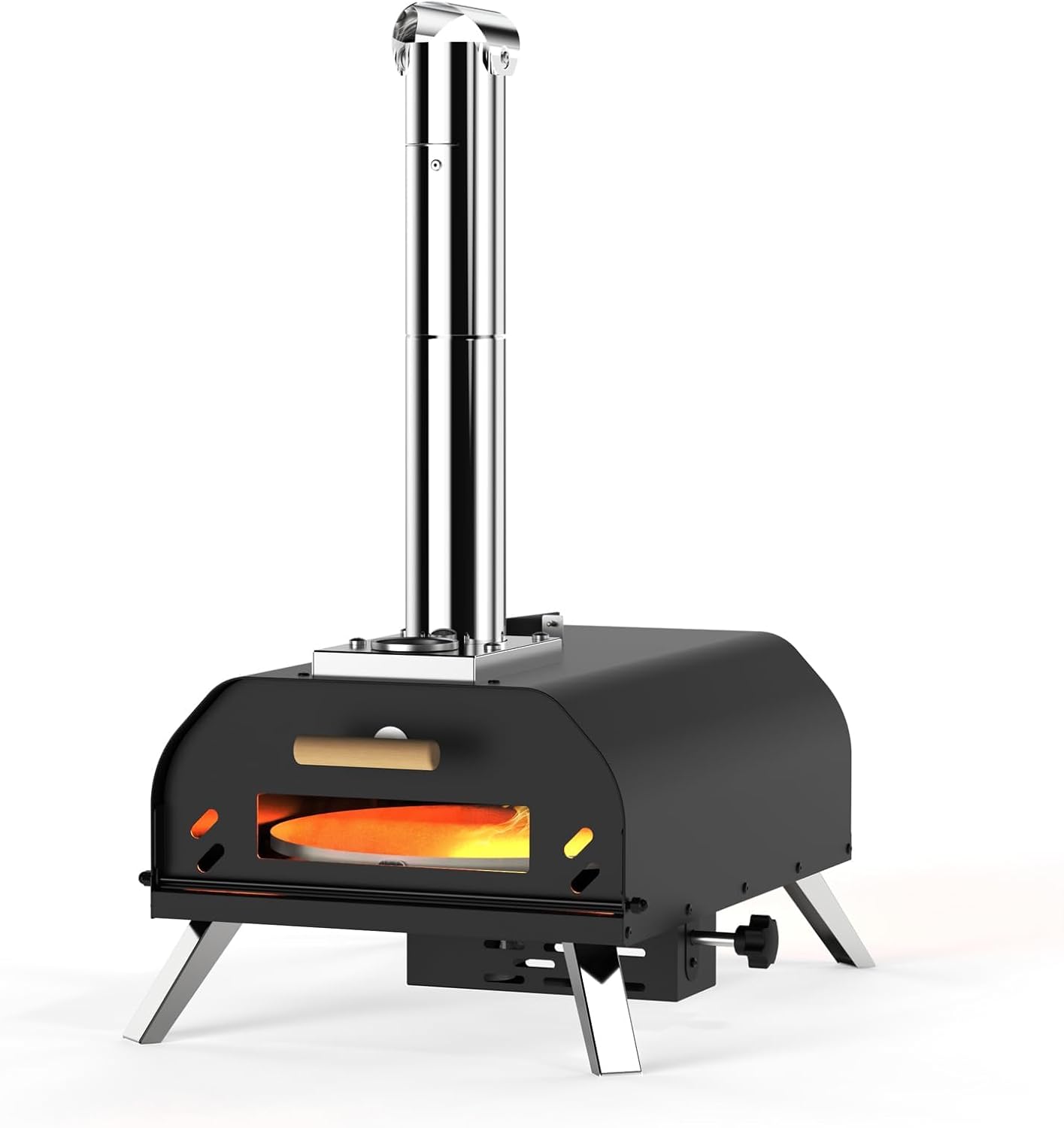

Outdoor Pizza Oven | Wood Oven Pizza Oven | Portable Pizza Oven
The Complete Australian Buying Guide to Outdoor Pizza Ovens, Wood-Fired Pizza Ovens & Portable Pizza Ovens
Whether you're a first-time buyer eyeing your first outdoor pizza oven, a seasoned home cook upgrading to a proper wood oven pizza oven, or an adventurer hunting for the best portable pizza oven for camping, this guide covers everything you need to know before spending a dollar. We break down how these ovens work, what separates a genuinely great outdoor pizza oven from a disappointing one, and exactly what to look for when comparing models in Australia.
- Why an outdoor pizza oven changes everything
- Types of outdoor pizza oven: wood, gas, and multi-fuel
- The wood oven pizza oven explained
- What makes a great portable pizza oven
- Temperature: the most important spec nobody talks about
- The baking stone: why it matters more than the oven body
- Choosing the right fuel for your outdoor pizza oven
- Size and portability considerations for Australians
- The verdict: which outdoor pizza oven is right for you
Why an Outdoor Pizza Oven Changes Everything
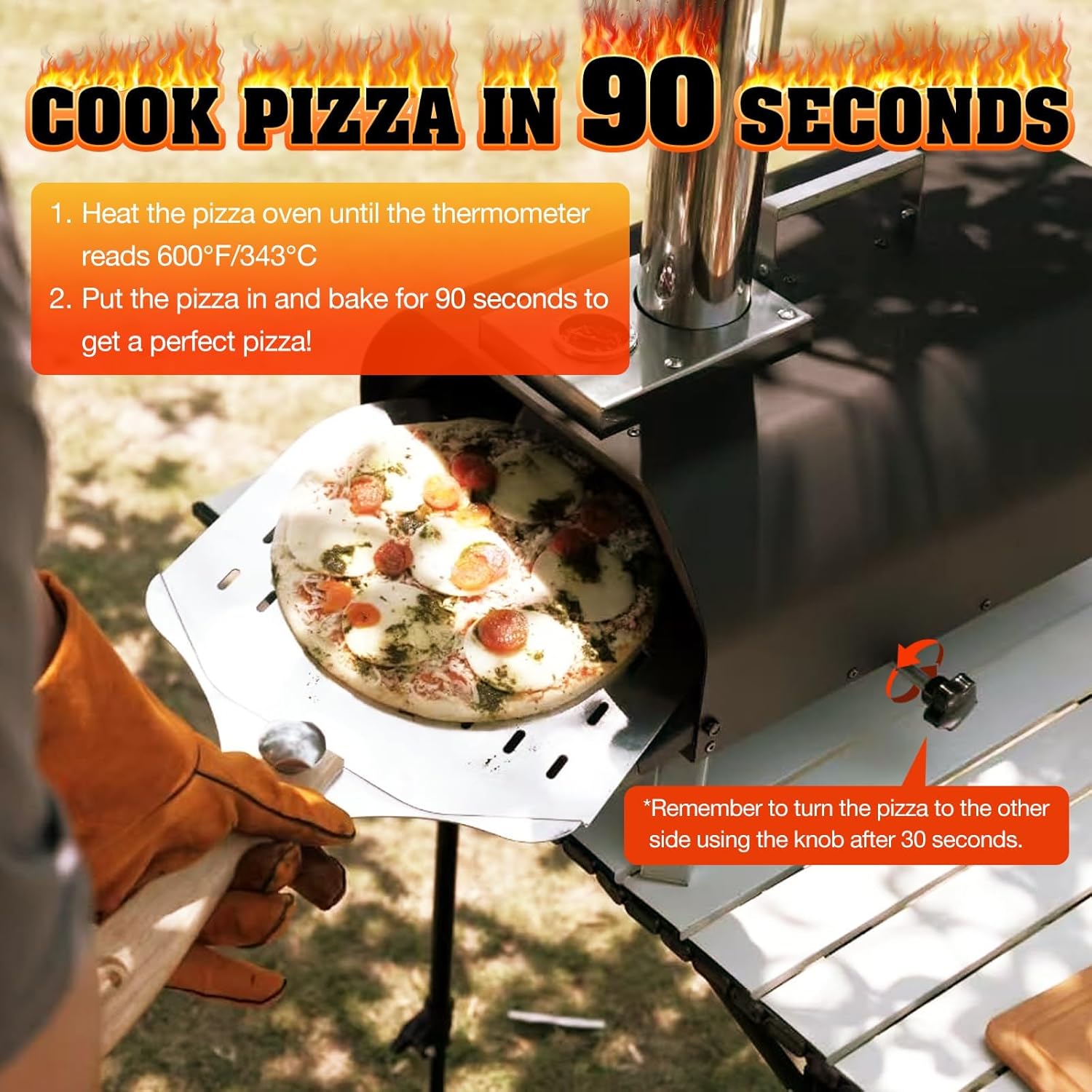
There is a moment, usually during the first cook, when you understand what a proper outdoor pizza oven actually does that a kitchen oven cannot. You slide a pizza into the chamber — stone-cold raw dough, topped simply with tomato and mozzarella — and ninety seconds later you pull out something that looks and tastes like it came from a Neapolitan restaurant. The crust has blistered and charred in exactly the right spots. The cheese has melted and started to bubble without burning. The base is crisp underneath but still airy inside.
No conventional oven — not even an expensive one set to its maximum 250°C — can produce this result. The physics simply don't allow it. A standard household oven at maximum temperature will take 8–12 minutes to cook a pizza, during which time the moisture in the toppings steams the dough from above, the cheese overcooks before the base is fully done, and the whole thing ends up somewhere between passable and disappointing. An outdoor pizza oven operating at 400–500°C cooks the same pizza so quickly that moisture is locked in, toppings and base reach doneness simultaneously, and the rapid char produces flavour compounds that slow-baked pizza simply never develops.
This is why the global market for outdoor pizza ovens has grown so sharply over the past five years, and why Australians — with their culture of outdoor entertaining, year-round backyard cooking, and openness to food-focused equipment — have been particularly enthusiastic adopters. A quality outdoor pizza oven has become the centrepiece of weekend hosting in the same way a Weber kettle or a premium gas barbecue once was.
Types of Outdoor Pizza Oven: Wood, Gas, and Multi-Fuel
The outdoor pizza oven market broadly divides into three fuel categories, each with genuine advantages and trade-offs.
Wood-fired outdoor pizza ovens are the traditional choice and, for most cooks, the most rewarding. They reach the highest temperatures, produce the most authentic flavour profile, and deliver the tactile satisfaction of managing a live fire. The downside is that they require more involvement — you need to build and tend the fire, add fuel during cooking, and manage temperature through airflow rather than a dial. The learning curve is real but short: most people are producing excellent results by their second or third session.
Gas outdoor pizza ovens offer instant ignition and precise temperature control via a knob. They heat up in 15–20 minutes and hold a consistent temperature without intervention. They're ideal for cooks who want convenience above all, or for environments where solid fuel is restricted (some apartment complexes and council areas). The trade-off is flavour: gas combustion adds no smokiness to the pizza, and while the results can be very good, they're missing the complexity that wood-fired cooking brings.
Multi-fuel outdoor pizza ovens attempt to bridge the gap, typically running on gas as a primary fuel with a wood chip tray added for flavour. In practice, these hybrid designs often compromise on peak temperature to accommodate both fuel types, and the "wood flavour" from a small chip tray is subtle at best. For most buyers, a dedicated wood oven pizza oven or a gas oven is a cleaner choice than a hybrid that does neither especially well.
The Wood Oven Pizza Oven Explained
The term "wood oven pizza oven" encompasses everything from the enormous fixed brick ovens found in Neapolitan pizzerias — which weigh tonnes, cost tens of thousands of dollars, and take days to build — to compact, portable wood-fired units that a single person can carry and set up in twenty minutes. The cooking science is the same regardless of scale: hardwood fuel burns at high temperature, heating a dense stone surface by radiant and conductive heat. Pizza placed on that stone cooks from below through conduction and from above through radiant heat from the roof and walls of the chamber.
What distinguishes a genuinely capable wood oven pizza oven from an underpowered imitation is its ability to sustain cooking temperatures above 400°C at the stone surface. Many entry-level models on the market peak at 250–300°C — barely better than a kitchen oven. At those temperatures, you cannot produce authentic Neapolitan-style results regardless of dough quality or toppings. The 60-second cook time that defines proper Neapolitan pizza requires stone temperatures above 380°C. The model we sell is engineered to reach 950°F / 500°C, which is the true Neapolitan sweet spot and among the highest in its class.
A high-quality wood oven pizza oven also needs good insulation, an efficient combustion chamber design, and a baking stone with sufficient thermal mass to recover quickly between pizzas. Thin, poorly insulated ovens lose heat rapidly every time the opening is used, meaning the first pizza might be excellent and the fourth mediocre. A well-designed wood oven pizza oven maintains stone temperature across an entire cooking session — critical for anyone cooking more than one or two pizzas at a time.
The flavour argument for a wood oven pizza oven over gas is not marketing. Hardwood combustion produces a complex mixture of combustion gases, including trace amounts of phenols, aldehydes, and organic acids, that deposit on the pizza's surface during cooking and contribute to the characteristic smoky, slightly charred complexity of proper wood-fired pizza. The specific wood species matters too: oak produces a mild, clean smoke; fruitwoods like apple or cherry add subtle sweetness; hickory contributes a stronger, more assertive smokiness. Australian hardwoods like ironbark and red gum are excellent choices — they burn hot, long, and cleanly.
What Makes a Great Portable Pizza Oven
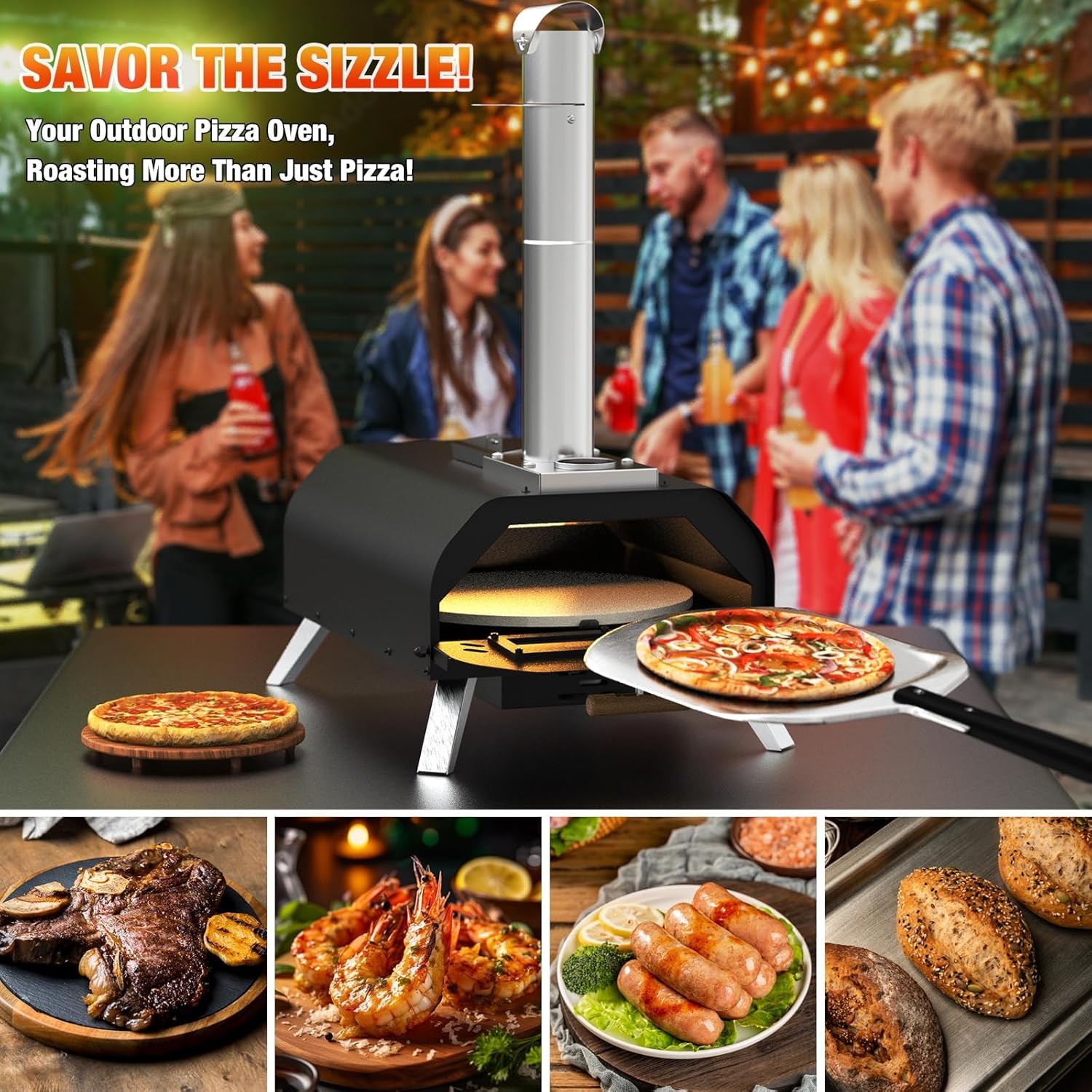
The portable pizza oven category has exploded in Australia over the past three years. The appeal is obvious: you don't need a fixed outdoor kitchen, you don't need a permanent installation, and you're not committed to one location. A good portable pizza oven goes where you go — the holiday house, the campsite, a friend's backyard, a rooftop dinner party.
But "portable" covers an enormous range of quality. A genuinely great portable pizza oven needs to balance several competing demands: it must be light enough to carry comfortably but have sufficient mass in the baking stone to hold heat effectively. It must be compact enough to fit in a car boot but large enough to cook a 30cm pizza. It must be robust enough to travel without damage but not so heavy that the portability is theoretical rather than practical.
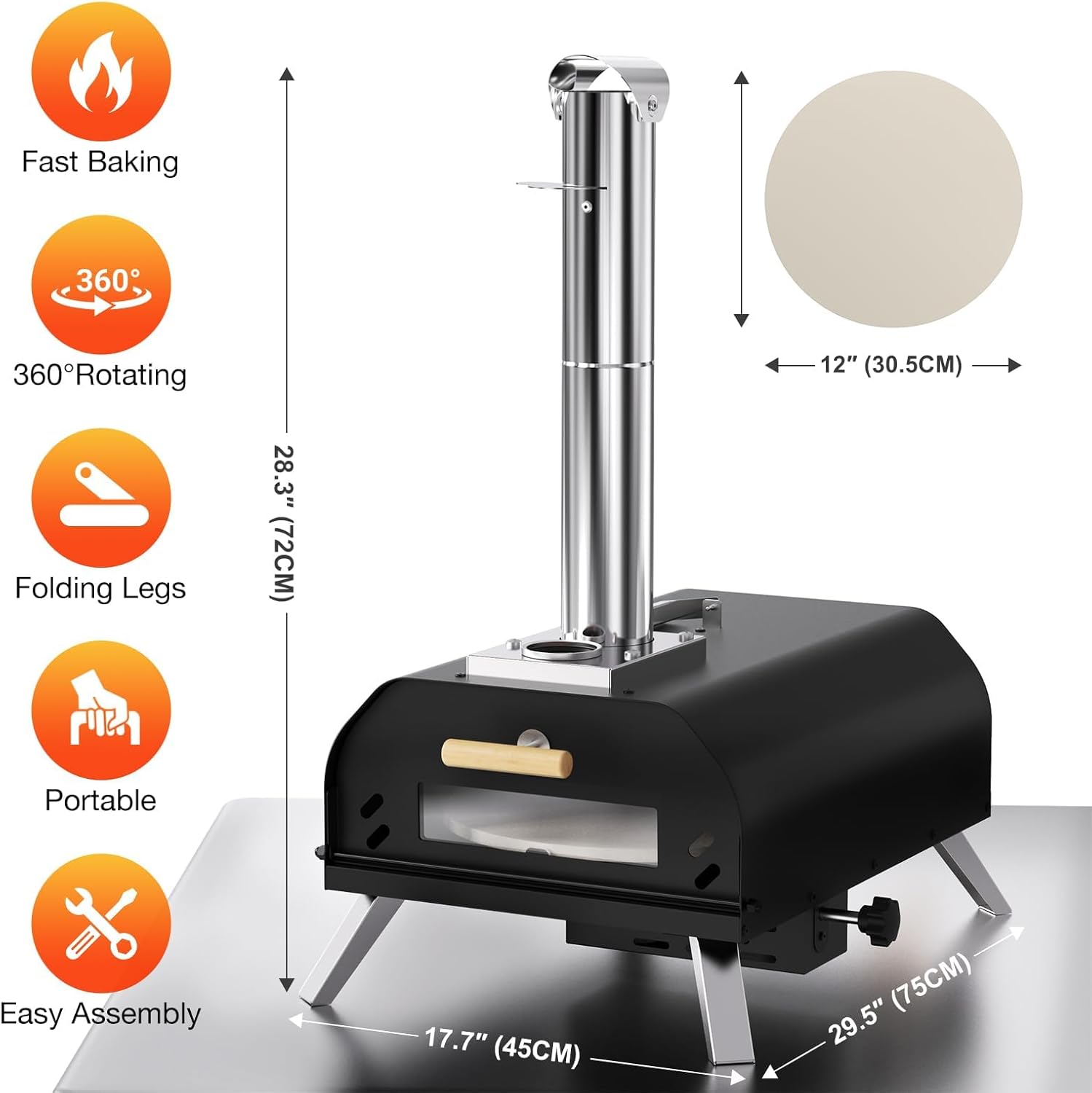
Weight is the primary consideration for most buyers of a portable pizza oven. This oven comes in at just 12 kg / 26 lb — the genuine sweet spot for portability without compromising thermal performance. The detachable chimney and quick-fold legs mean it packs into a car boot or camper van in minutes, taking pizza night to the beach, park, or campsite.
Setup and breakdown time matters enormously for a portable pizza oven. An oven that requires tools, specialised knowledge, or 45 minutes of assembly defeats much of the portability benefit. The best portable pizza ovens assemble in under 5 minutes — chimney attaches without tools, legs fold out or click into place, and the unit is ready to light immediately. Disassembly and packing should be equally fast once the oven has cooled.
Fuel availability is a practical consideration specific to Australian buyers of a portable pizza oven. While gas canisters are available virtually everywhere, hardwood pellets — the most convenient fuel for a portable wood-fired pizza oven — are now stocked at Bunnings nationwide. A 5 kg bag, which fits easily alongside the oven in a car, is enough fuel for multiple cooking sessions. This has made wood-fired portability genuinely practical for Australian cooks in a way that wasn't true five years ago.
Finally, consider the cooking surface. The baking stone in a portable pizza oven should be cordierite — a ceramic material engineered to withstand extreme thermal cycling without cracking. Cheaper portable pizza ovens use thin terracotta or steel baking surfaces that either crack after a few uses or fail to store enough heat to cook pizza properly. A good cordierite stone in a portable pizza oven will last for years of regular use.
Temperature: The Most Important Spec Nobody Talks About
When comparing outdoor pizza ovens, most buyers focus on size, weight, and price. The single most important specification — the maximum temperature the oven achieves at the stone surface — is often buried in the fine print or stated ambiguously. This is a mistake. Temperature determines whether your outdoor pizza oven can actually cook pizza the way it's supposed to be cooked.
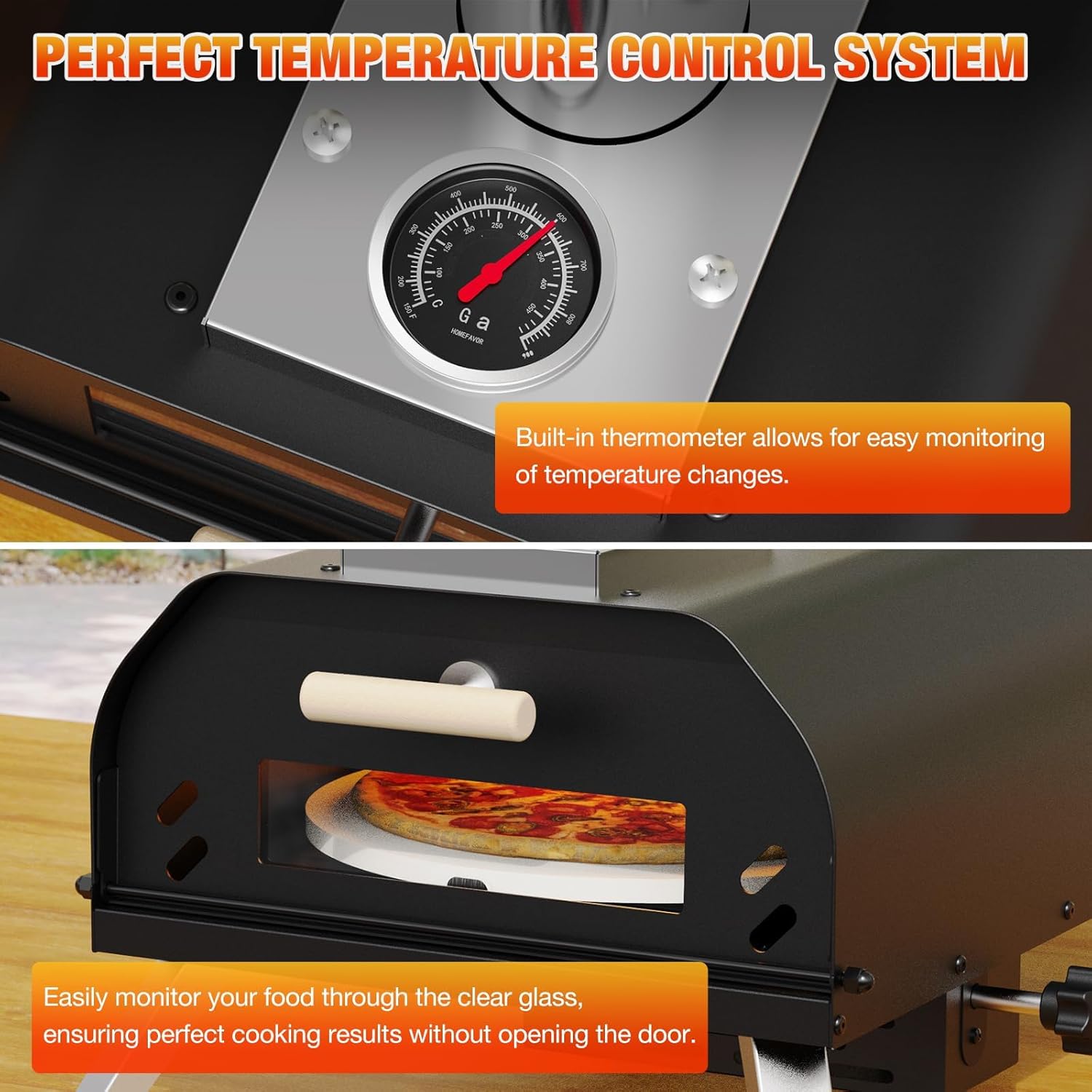
Here's a practical benchmark: an outdoor pizza oven capable of 500°C+ at the stone surface is a serious, professional-grade pizza oven. An oven that reaches 400–450°C is excellent. An oven that peaks at 300°C or below is, effectively, an expensive way to produce mediocre pizza you could have made in your kitchen oven for far less money. Always look for temperature claims that specify stone surface temperature — the model we sell is engineered to reach 950°F / 500°C, verified by its integrated dual-scale thermometer.
The integrated thermometer on a quality outdoor pizza oven is essential, not optional. Without it, you're guessing. This model also includes a built-in flame-view window — letting you monitor both the fire and your pizza cook in real time without opening the door and losing heat. These two features together remove the guesswork that puts people off wood-fired cooking.
The Baking Stone: Why It Matters More Than the Oven Body
The most underappreciated component of any outdoor pizza oven — wood-fired or otherwise — is the baking stone. The stone is what actually cooks the base of the pizza. It stores thermal energy as it heats up and releases that energy rapidly into the dough the moment a pizza is placed on it. A thick, dense, high-quality stone can store enough energy to cook multiple pizzas back-to-back without significant temperature drop. A thin, cheap stone loses its stored heat after the first pizza and takes several minutes to recover — producing inconsistent results across a session.
Cordierite is the material of choice for high-performance baking stones in outdoor pizza ovens. It has excellent thermal shock resistance (meaning it won't crack when cold water or a cold pizza hits a very hot surface), high heat conductivity, and a porous structure that absorbs moisture from the dough as it cooks — contributing directly to the crispy, non-soggy base that distinguishes great pizza from ordinary pizza. Steel baking surfaces — popular in some pizza oven designs — conduct heat faster but don't absorb moisture, producing a different (crispier, less airy) style of crust that some cooks prefer and others don't.
When evaluating any outdoor pizza oven, check the stone thickness. A 1.5 cm+ cordierite stone is a good indicator of a quality product. Anything below 1 cm will struggle to retain heat across a cooking session. Also check whether replacement stones are available — a good outdoor pizza oven manufacturer will stock replacement parts, extending the life of the product significantly.
Choosing the Right Fuel for Your Outdoor Pizza Oven
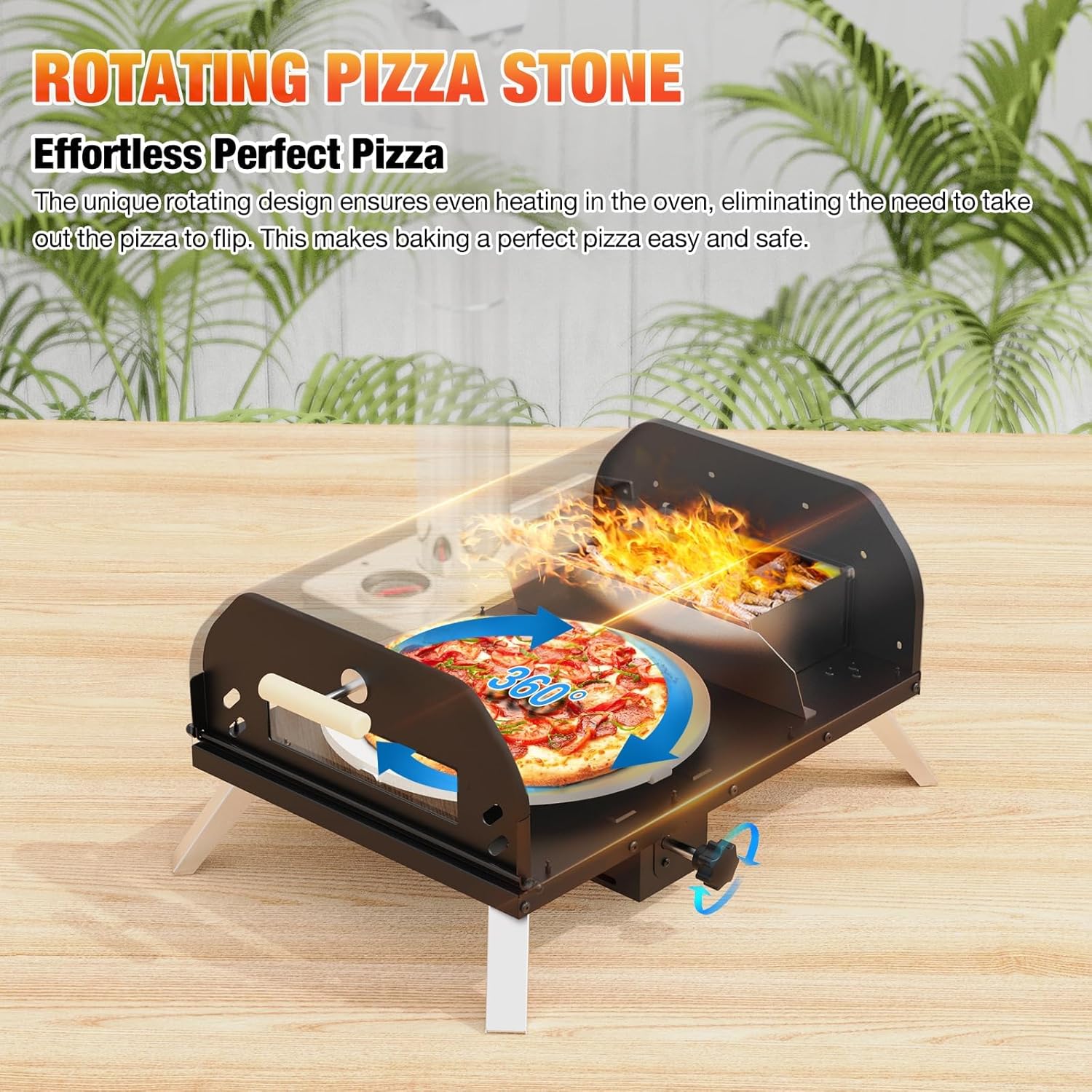
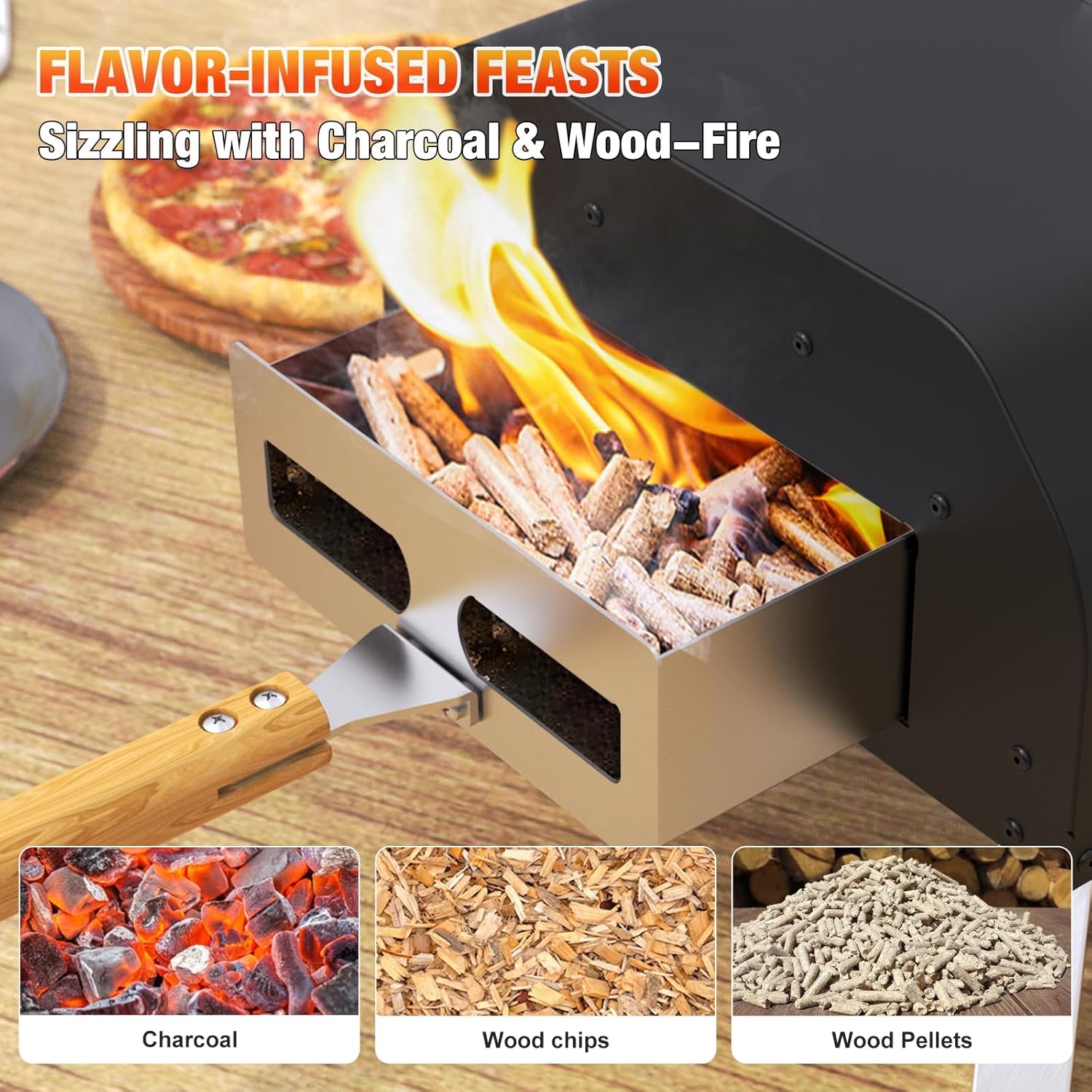
For this wood oven pizza oven, food-grade hardwood pellets are the recommended — and optimal — fuel. Pellets offer maximum cooking freedom: they're consistent in size and moisture content, ignite quickly, burn at the high efficiency needed to reach 500°C, and are available nationwide at Bunnings, Mitre 10, and camping stores. Wood chunks and coal have significantly lower burning efficiency in this oven design and are not recommended — they make temperature control harder and produce inconsistent results.
For pellet selection, oak burns cleanly with mild flavour and is the easiest to find. Fruitwood varieties (apple, cherry) add subtle sweetness. Hickory delivers stronger, more assertive smokiness. All three are available in Australia and produce superior results to wood chunks or coal for this type of outdoor pizza oven.
Size and Portability Considerations for Australians
Australian backyards vary enormously — from compact inner-city courtyards to sprawling suburban gardens to rural properties with unlimited space. The good news is that a quality portable pizza oven is as effective in a small courtyard as it is in a large backyard. The 30cm / 12-inch cooking surface that defines most portable outdoor pizza ovens is the standard Neapolitan size — it's not a compromise on quality, it's the authentic format.
For Australians who entertain regularly, the practical throughput of a portable pizza oven matters. At 90 seconds per pizza with a 2–3 minute recovery time between cooks, a single portable pizza oven can produce 12–15 pizzas in an hour — more than enough for a group of 8–12 people if you're cooking sequentially. For larger gatherings, running two portable pizza ovens side by side is a cost-effective alternative to investing in a larger fixed installation.
Storage is also a practical consideration specific to Australian buyers. Unlike European buyers who often have enclosed storage sheds or garages, many Australian homes have limited covered storage. A good portable pizza oven with a carry bag can be stored in a laundry, under a covered entertaining area, or in the boot of a car between uses. The stainless steel body handles Australian weather well but will last longer if protected from extended sun and rain exposure.
The Verdict: Which Outdoor Pizza Oven Is Right for You?
After weighing all the variables — temperature performance, build quality, fuel type, portability, baking stone quality, and total cost of ownership — the right outdoor pizza oven for most Australian home cooks is a compact, wood-fired model that reaches genuine cooking temperatures, uses a thick cordierite stone, and is light enough to actually move when needed.
The outdoor pizza oven we sell meets all of those criteria. It reaches 950°F / 500°C at the stone surface — true Neapolitan cooking temperature — and uses a pre-installed 12″ cordierite baking stone. It features an integrated thermometer in both °F and °C, a built-in flame-view window so you can watch the cook without opening the door, and comes with heat-resistant safety gloves. The SUS430 stainless steel body reflects heat evenly for consistent results, and at just 12 kg with a detachable chimney and quick-fold legs, it's genuinely portable for camping, touring, and events.
If you're buying your first outdoor pizza oven, this model removes the barriers that put people off wood-fired cooking: the thermometer removes guesswork, the flame-view window lets you watch the pizza without losing heat, and wood pellet compatibility means you don't need to source and split hardwood before your first cook. If you're upgrading from a cheaper outdoor pizza oven that never delivered the results you hoped for, hitting 500°C will be the reset you've been looking for.
The best time to buy a quality outdoor pizza oven in Australia is now — before summer, before the backyard entertaining season begins, and with enough time to get two or three practice cooks done before you're cooking for guests. At $440 AUD with free shipping from Sydney, it's the most direct path to wood-fired pizza that most Australians will ever find.